

一、Spring 中的循環依賴問題
1、Spring 中的循環依賴概述
Spring 循環依賴指的是 SpringBean 對象之間的依賴關係形成一個閉環。即在代碼中,把兩個或者多個 Bean 相互之間去持有對方的引用,就會發生循環依賴,循環依賴會導致注入出現死循環,這是 Spring 發生循環依賴的主要原因之一。
Spring 循環依賴主要有三種情況,即:自身依賴自身,兩者互相依賴,多者循環依賴
- 自身依賴自身:自己依賴自己的直接依賴
- 兩者互相依賴:兩個對象之間的直接依賴
- 多者循環依賴:多個對象之間的間接依賴
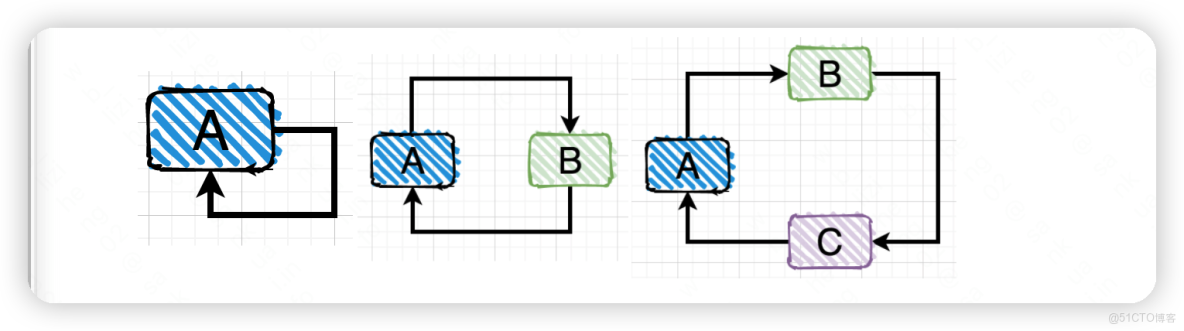
自身依賴自身,兩者互相依賴 兩者互相依賴的情況比較直觀,很好辨識,但是我們工作中最有可能觸發的還是多者循環依賴,多者循環依賴的情況有時候因為業務代碼調用層級很深,不容易識別出來。但無論循環依賴的數量有多少,循環依賴的本質是一樣的。就是你的完整創建依賴於我,而我的完整創建也依賴於你,但我們互相沒法解耦,最終導致依賴創建失敗。
2、Spring 中的循環依賴的 5 種場景
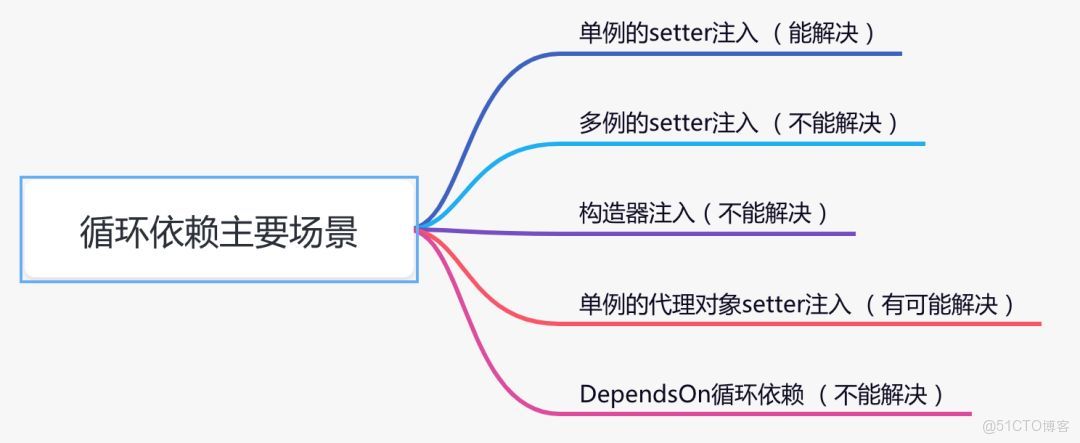
Spring 中出現循環依賴主要有着 5 種場景: ①、單例的 setter 注入(能解決);②、多例的 setter 注入(不能解決);③、構造器注入(不能解決);④、單例的代理對象 setter 注入(有可能解決);⑤、DependsOn 循環依賴(不能解決)。接下來我們逐一來看。
二、Spring 三級緩存
1、spring 創建 bean 的流程
在開始理解 Spring 三級緩存如何讓解決循環依賴問題前我們先來温習一下 spring 創建 bean 的流程:
- Spring 啓動時會根據配置文件或啓動類把所有的 bean 註冊成 bean 定義(就是映射 <bean> 標籤屬性的 Java 類)
- 遍歷 bean 定義中的 beanName,調用 BeanFactory#getBean(beanName) 方法創建、初始化並返回 bean 實例
其中 getBean 方法:
- 先從緩存(一層到三層依次獲取)拿,沒有就去創建;
- 創建 Bean 時,把 beanName 標記為正在創建中,通過其定義裏的 class 找到構造器方法反射創建實例,並把其對象工廠放入第三層緩存;
- 對實例初始化,移除正在創建中的標記,把實例放入第一層緩存,移除第二、三層中的緩存,最後返回實例
Ps1:實例初始化過程:獲取此 bean 中有 @Autowired 等註解的成員變量,從所有 bean 定義中找出此類型的 beanName,又通過 BeanFactory#getBean 方法獲取實例,然後反射設值成員變量。
Ps2:上述流程中 斜體 部分為觸發循環依賴時多出主流程的步驟。
位於 org.springframework.beans.factory.support.DefaultSingletonBeanRegistry 中的三級緩存源碼:
/** Cache of singleton objects: bean name to bean instance. */
	private final Map<String, Object> singletonObjects = new ConcurrentHashMap<>(256);

	/** Cache of singleton factories: bean name to ObjectFactory. */
	private final Map<String, ObjectFactory<?>> singletonFactories = new HashMap<>(16);

	/** Cache of early singleton objects: bean name to bean instance. */
	private final Map<String, Object> earlySingletonObjects = new ConcurrentHashMap<>(16);
2、場景一:單例的 setter 注入
這種注入方式應該是 Spring 中最常見的,Demo 如下:
@Service
public class TestService1 {
    @Autowired
    private TestService2 testService2;
    public void test1() {
    }
}

@Service
public class TestService2 {
    @Autowired
    private TestService1 testService1;
    public void test2() {
    }
}
在上述代碼中,就是一個經典的循環依賴,其中 TestService1 依賴 TestService2,TestService2 依賴 TestService1 構成了一個簡單了兩者互相依賴關係,但是我們在使用類似代碼時,並沒有感知過該類型的循環依賴存在,因為此種類型已經被 Spring 默默解決了。
3、三級緩存
Spring 內部有三級緩存:
- 一級緩存(singletonObjects),用於保存實例化、注入、初始化完成的 Bean 實例
- 二級緩存(earlySingletonObjects),用於保存實例化完成的 Bean 實例
- 三級緩存(singletonFactories),用於保存 Bean 的創建工廠,以便於後面擴展有機會創建代理對象。
以上面 Demo 為例,現在項目啓動,spring 開始創建 bean,比如先創建 TestService1:
- 標記 TestService1 為正在創建中,反射創建其實例,其對象工廠放入第三層緩存
- 初始化 TestService1 實例化時發現需要依賴注入 TestService2,則獲取 TestService2 的實例
- 標記 TestService2 為正在創建中,反射創建其實例,其對象工廠放入第三層緩存
- 初始化 TestService2 實例化時發現需要依賴注入 TestService1,則獲取 TestService1 的實例
- 這時候從緩存中獲取時,TestService1 為正在創建中且第三層緩存有 TestService1 的值了,所以調用緩存的對象工廠的 getObject 方法,把返回的 TestService1 實例放入第二層緩存,刪除第三層緩存
- TestService2 實例初始化完成,放入第一層緩存,移除第二、三層中的緩存
- 回到第 2 步,TestService1 實例初始化完成,放入第一層緩存,移除第二、三層中的緩存
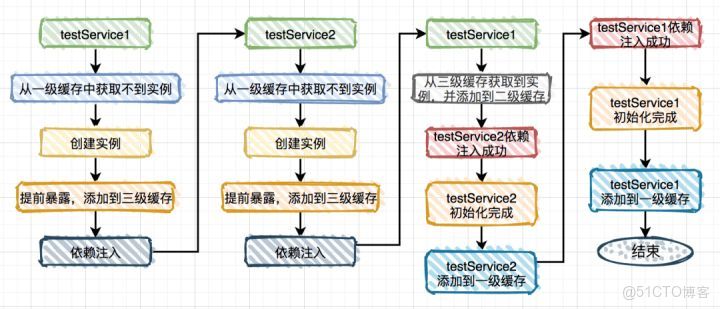
下面是 getBean(beanName) 方法最先調用的從這三層緩存中獲取 bean 實例的邏輯(即上面第5步)
/**
  * Return the (raw) singleton object registered under the given name.
  * <p>Checks already instantiated singletons and also allows for an early
  * reference to a currently created singleton (resolving a circular reference).
  * @param beanName the name of the bean to look for
  * @param allowEarlyReference whether early references should be created or not
  * @return the registered singleton object, or {@code null} if none found
  */
	@Nullable
	protected Object getSingleton(String beanName, boolean allowEarlyReference) {
  // Quick check for existing instance without full singleton lock
  Object singletonObject = this.singletonObjects.get(beanName);
  if (singletonObject == null && isSingletonCurrentlyInCreation(beanName)) {
  	singletonObject = this.earlySingletonObjects.get(beanName);
  	if (singletonObject == null && allowEarlyReference) {
    synchronized (this.singletonObjects) {
    	// Consistent creation of early reference within full singleton lock
    	singletonObject = this.singletonObjects.get(beanName);
    	if (singletonObject == null) {
      singletonObject = this.earlySingletonObjects.get(beanName);
      if (singletonObject == null) {
      	ObjectFactory<?> singletonFactory = this.singletonFactories.get(beanName);
      	if (singletonFactory != null) {
        singletonObject = singletonFactory.getObject();
        this.earlySingletonObjects.put(beanName, singletonObject);
        this.singletonFactories.remove(beanName);
      	}
      }
    	}
    }
  	}
  }
  return singletonObject;
	}
以及一直提到的對象工廠,及其 getObject 方法的實現:
/**
  * Obtain a reference for early access to the specified bean,
  * typically for the purpose of resolving a circular reference.
  * @param beanName the name of the bean (for error handling purposes)
  * @param mbd the merged bean definition for the bean
  * @param bean the raw bean instance
  * @return the object to expose as bean reference
  */
	protected Object getEarlyBeanReference(String beanName, RootBeanDefinition mbd, Object bean) {
  Object exposedObject = bean;
  if (!mbd.isSynthetic() && hasInstantiationAwareBeanPostProcessors()) {
  	for (BeanPostProcessor bp : getBeanPostProcessors()) {
    if (bp instanceof SmartInstantiationAwareBeanPostProcessor) {
    	SmartInstantiationAwareBeanPostProcessor ibp = (SmartInstantiationAwareBeanPostProcessor) bp;
    	exposedObject = ibp.getEarlyBeanReference(exposedObject, beanName);
    }
  	}
  }
  return exposedObject;
	}
4、關於二級緩存
細心的朋友可能會發現在這種場景中第二級緩存作用不大。那麼問題來了,為什麼要用第二級緩存呢?
試想一下,如果出現以下這種情況,我們要如何處理?
@Service
public class TestService1 {
    @Autowired
    private TestService2 testService2;
    @Autowired
    private TestService3 testService3;
    public void test1() {
    }
}
@Service
public class TestService2 {
    @Autowired
    private TestService1 testService1;
    public void test2() {
    }
}
@Service
public class TestService3 {
    @Autowired
    private TestService1 testService1;
    public void test3() {
    }
}
TestService1 依賴於 TestService2 和 TestService3,而 TestService2 依賴於 TestService1,同時 TestService3 也依賴於 TestService1。按照上圖的流程可以把 TestService1 注入到 TestService2,並且 TestService1 的實例是從第三級緩存中獲取的。
假設不用第二級緩存,TestService1 注入到 TestService3 的流程如圖:
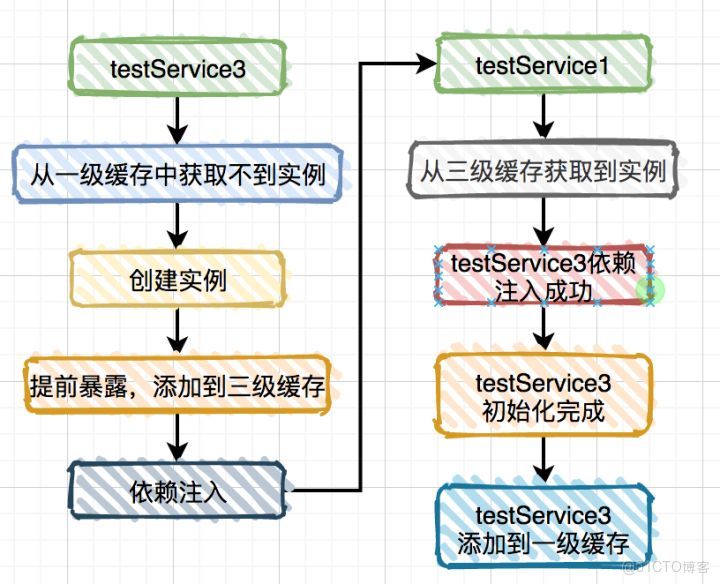
TestService1 注入到 TestService3 又需要從第三級緩存中獲取實例,而第三級緩存裏保存的並非真正的實例對象,而是 ObjectFactory對象。説白了,兩次從三級緩存中獲取都是 ObjectFactory 對象,而通過它創建的實例對象每次可能都不一樣的。這樣不是有問題?
為了解決這個問題,Spring 引入的第二級緩存。上面其實 TestService1 對象的實例已經被添加到第二級緩存中了,而在 TestService1 注入到 TestService3 時,只用從第二級緩存中獲取該對象即可。
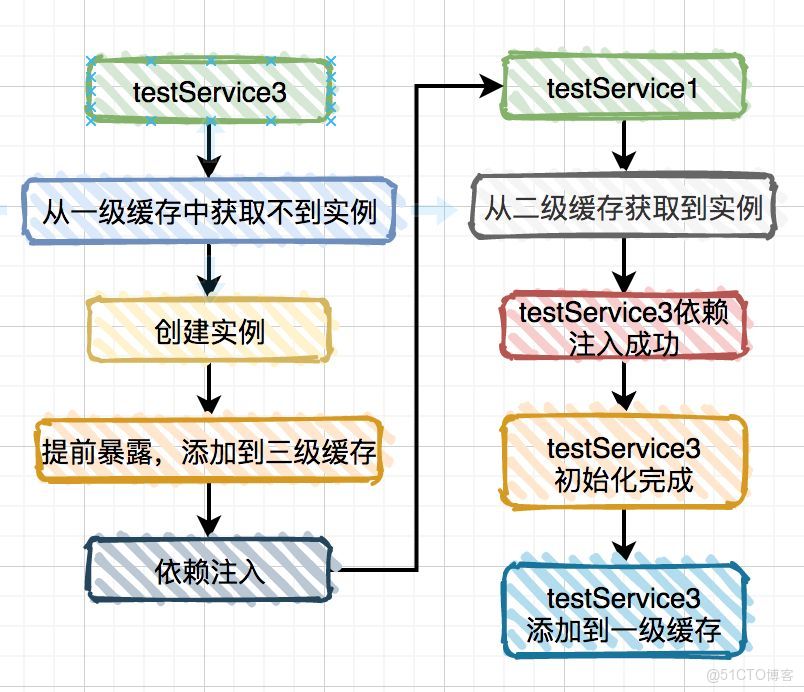
還有個問題,第三級緩存中為什麼要添加 ObjectFactory 對象,直接保存實例對象不行嗎?答:不行,因為假如你想對添加到三級緩存中的實例對象進行增強,直接用實例對象是行不通的。
三、循環依賴的其他 4 種場景
1、多例的 setter 注入
這種注入方法偶然會有,特別是在多線程的場景下,具體代碼如下:
@Scope(ConfigurableBeanFactory.SCOPE_PROTOTYPE)
@Service
public class TestService1 {
    @Autowired
    private TestService2 testService2;
    public void test1() {
    }
}
@Scope(ConfigurableBeanFactory.SCOPE_PROTOTYPE)
@Service
public class TestService2 {
    @Autowired
    private TestService1 testService1;
    public void test2() {
    }
}
在上述多例的 setter 注入情況下,Spring 程序也是能夠正常啓動啓動的,其實在 AbstractApplicationContext 類的 refresh方法中告訴了我們答案,它會調用 finishBeanFactoryInitialization 方法,該方法的作用是為了 Spring 容器啓動的時候提前初始化一些 Bean。該方法的內部又調用了 preInstantiateSingletons 方法
@Override
	public void preInstantiateSingletons() throws BeansException {
  if (logger.isTraceEnabled()) {
  	logger.trace("Pre-instantiating singletons in " + this);
  }

  // Iterate over a copy to allow for init methods which in turn register new bean definitions.
  // While this may not be part of the regular factory bootstrap, it does otherwise work fine.
  List<String> beanNames = new ArrayList<>(this.beanDefinitionNames);

  // Trigger initialization of all non-lazy singleton beans...
  for (String beanName : beanNames) {
  	RootBeanDefinition bd = getMergedLocalBeanDefinition(beanName);
  	if (!bd.isAbstract() && bd.isSingleton() && !bd.isLazyInit()) {
    if (isFactoryBean(beanName)) {
    	Object bean = getBean(FACTORY_BEAN_PREFIX + beanName);
    	if (bean instanceof FactoryBean) {
      FactoryBean<?> factory = (FactoryBean<?>) bean;
      boolean isEagerInit;
      if (System.getSecurityManager() != null && factory instanceof SmartFactoryBean) {
      	isEagerInit = AccessController.doPrivileged(
        	(PrivilegedAction<Boolean>) ((SmartFactoryBean<?>) factory)::isEagerInit,
        	getAccessControlContext());
      }
      else {
      	isEagerInit = (factory instanceof SmartFactoryBean &&
        	((SmartFactoryBean<?>) factory).isEagerInit());
      }
      if (isEagerInit) {
      	getBean(beanName);
      }
    	}
    }
    else {
    	getBean(beanName);
    }
  	}
  }
其中 非抽象、單例 並且非懶加載的類才能被提前初始 Bean。,而多例即 SCOPE_PROTOTYPE 類型的類,非單例,不會被提前初始化 Bean,所以程序能夠正常啓動。如何讓他提前初始化bean呢?
只需要再在 DEMO 中定義一個單例的類,在它裏面注入 TestService1
@Service
public class TestService3 {
    @Autowired
    private TestService1 testService1;
}
重新啓動程序,執行結果:
Requested bean is currently in creation: Is there an unresolvable circular reference?果然出現了循環依賴。
Ps:這種循環依賴問題是無法解決的,因為它沒有用緩存,每次都會生成一個新對象。
2、構造器注入
這種注入方式現在其實用的已經非常少了,但是我們還是有必要了解一下,如下代碼:
@Service
public class TestService1 {
    public TestService1(TestService2 testService2) {
    }
}
@Service
public class TestService2 {
    public TestService2(TestService1 testService1) {
    }
}
運行結果:
Requested bean is currently in creation: Is there an unresolvable circular reference?出現了循環依賴,為什麼呢?
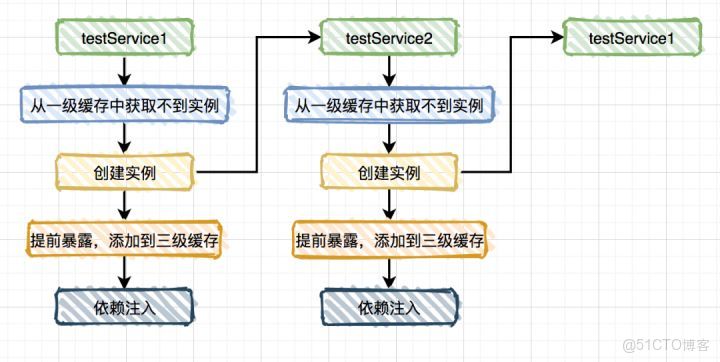
從圖中的流程看出構造器注入沒能添加到三級緩存,也沒有使用緩存,所以也無法解決循環依賴問題。
3、單例的代理對象 setter 注入
這種注入方式其實也比較常用,比如平時使用:@Async 註解的場景,會通過 AOP 自動生成代理對象。
@Service
public class TestService1 {
    @Autowired
    private TestService2 testService2;
    @Async
    public void test1() {
    }
}
@Service
public class TestService2 {
    @Autowired
    private TestService1 testService1;
    public void test2() {
    }
}
從前面得知程序啓動會報錯,出現了循環依賴,為什麼會循環依賴呢?答案就在下面這張圖中:
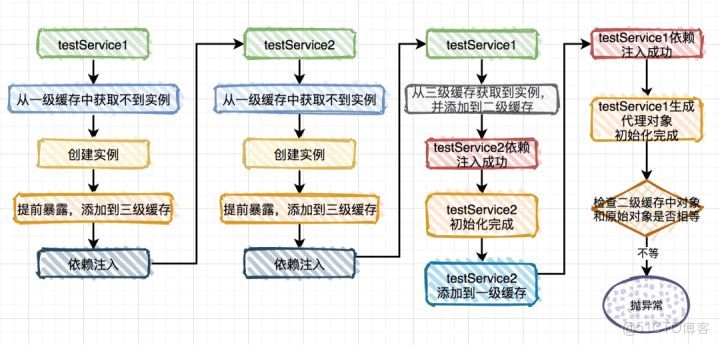
説白了,Bean 初始化完成之後,後面還有一步去檢查:第二級緩存和原始對象是否相等。由於它對前面流程來説無關緊要,所以前面的流程圖中省略了,但是在這裏是關鍵點,我們重點説説:
if (earlySingletonExposure) {
  	Object earlySingletonReference = getSingleton(beanName, false);
  	if (earlySingletonReference != null) {
    if (exposedObject == bean) {
    	exposedObject = earlySingletonReference;
    }
    else if (!this.allowRawInjectionDespiteWrapping && hasDependentBean(beanName)) {
    	String[] dependentBeans = getDependentBeans(beanName);
    	Set<String> actualDependentBeans = new LinkedHashSet<>(dependentBeans.length);
    	for (String dependentBean : dependentBeans) {
      if (!removeSingletonIfCreatedForTypeCheckOnly(dependentBean)) {
      	actualDependentBeans.add(dependentBean);
      }
    	}
    	if (!actualDependentBeans.isEmpty()) {
      throw new BeanCurrentlyInCreationException(beanName,
        "Bean with name '" + beanName + "' has been injected into other beans [" +
        StringUtils.collectionToCommaDelimitedString(actualDependentBeans) +
        "] in its raw version as part of a circular reference, but has eventually been " +
        "wrapped. This means that said other beans do not use the final version of the " +
        "bean. This is often the result of over-eager type matching - consider using " +
        "'getBeanNamesForType' with the 'allowEagerInit' flag turned off, for example.");
    	}
    }
  	}
  }
正好是走到這段代碼,發現第二級緩存和原始對象不相等,所以拋出了循環依賴的異常。如果這時候把 TestService1 改個名字,改成:TestService6,其他的都不變。
@Service
public class TestService6 {
    @Autowired
    private TestService2 testService2;
    @Async
    public void test1() {
    }
}
再重新啓動一下程序,神奇般的好了。這是為什麼?這就要從 Spring Bean 加載順序説起了,默認情況下,Spring 是按照文件完整路徑遞歸查找的,按路徑+文件名排序,排在前面的先加載。所以 TestService1 比T estService2 先加載,而改了文件名稱之後,TestService2 比 TestService6 先加載。
為什麼 TestService2 比 TestService6 先加載就沒問題呢?答案在下面這張圖中:
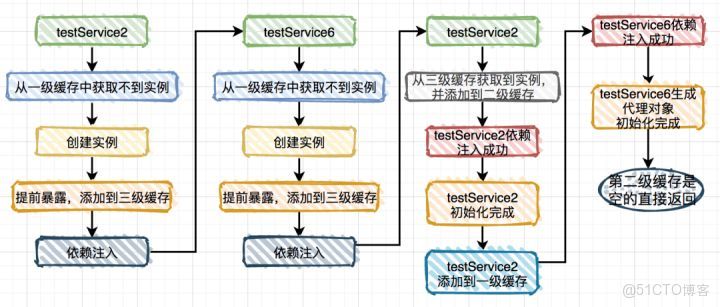
這種情況 testService6 中其實第二級緩存是空的,不需要跟原始對象判斷,所以不會拋出循環依賴。
4、DependsOn 循環依賴
還有一種有些特殊的場景,比如我們需要在實例化 Bean A 之前,先實例化 Bean B,這個時候就可以使用 @DependsOn 註解。
@DependsOn(value = "testService2")
@Service
public class TestService1 {
    @Autowired
    private TestService2 testService2;
    public void test1() {
    }
}
@DependsOn(value = "testService1")
@Service
public class TestService2 {
    @Autowired
    private TestService1 testService1;
    public void test2() {
    }
}
程序啓動之後,執行結果:
Circular depends-on relationship between 'testService2' and 'testService1'這個例子中本來如果 TestService1 和 TestService2 都沒有加 @DependsOn 註解是沒問題的,反而加了這個註解會出現循環依賴問題。
這又是為什麼?答案在 AbstractBeanFactory 類的 doGetBean 方法的這段代碼中:
// Guarantee initialization of beans that the current bean depends on.
    String[] dependsOn = mbd.getDependsOn();
    if (dependsOn != null) {
    	for (String dep : dependsOn) {
      if (isDependent(beanName, dep)) {
      	throw new BeanCreationException(mbd.getResourceDescription(), beanName,
        	"Circular depends-on relationship between '" + beanName + "' and '" + dep + "'");
      }
      registerDependentBean(dep, beanName);
      try {
      	getBean(dep);
      }
      catch (NoSuchBeanDefinitionException ex) {
      	throw new BeanCreationException(mbd.getResourceDescription(), beanName,
        	"'" + beanName + "' depends on missing bean '" + dep + "'", ex);
      }
    	}
    }
它會檢查 dependsOn 的實例有沒有循環依賴,如果有循環依賴則拋異常。
三、出現循環依賴如何解決?
項目中如果出現循環依賴問題,説明是 Spring 默認無法解決的循環依賴,要看項目的打印日誌,屬於哪種循環依賴。目前包含下面幾種情況:
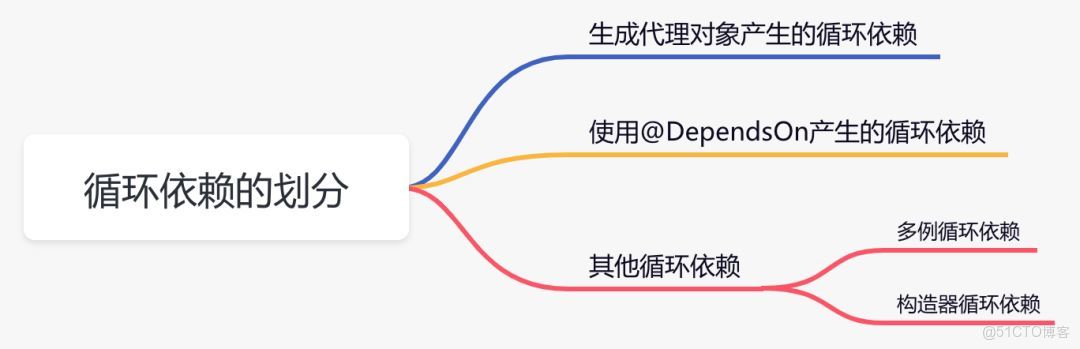
解決方式:
生成代理對象產生的循環依賴: ①、 使用 @Lazy 註解,延遲加載 ②、使用 @DependsOn 註解,指定加載先後關係 ③、修改文件名稱,改變循環依賴類的加載順序
多例循環依賴: 可以通過把 Bean 改成單例的解決
構造器循環依賴: 可以通過使用 @Lazy 註解解決
使用 @DependsOn 產生的循環依賴: 要找到@DependsOn註解循環依賴的地方,迫使它不循環依賴就可以解決問題
