

點擊上方“程序員蝸牛g”,選擇“設為星標”
跟蝸牛哥一起,每天進步一點點

程序員蝸牛g
大廠程序員一枚 跟蝸牛一起 每天進步一點點
33篇原創內容
公眾號
思考一個問題:當一個複雜的業務請求需要經過多個處理節點時,我們通常會怎麼做?
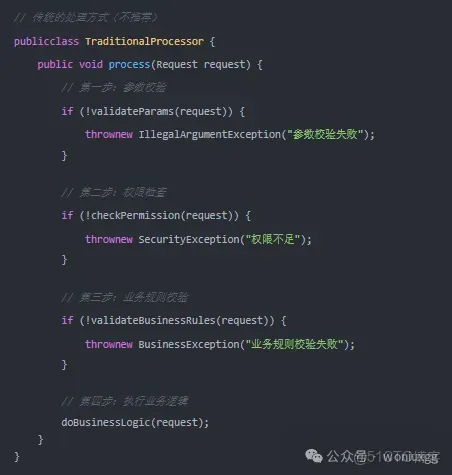
這種方式有什麼問題呢?
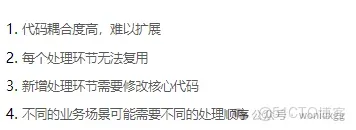
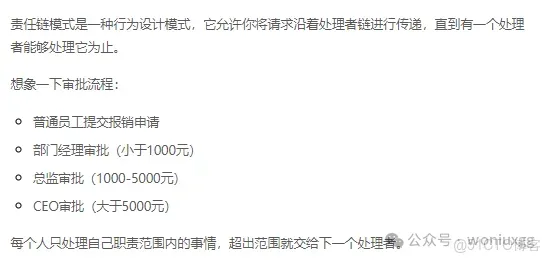
二、什麼是責任鏈模式?
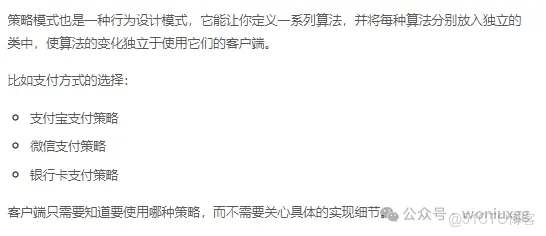
三、什麼是策略模式?
四、兩種模式如何結合?
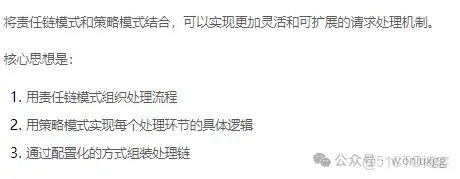
五、實現思路詳解
5.1 定義統一的處理接口
首先我們需要定義一個統一的處理器接口:
// 處理器接口
public interface RequestHandler {
    /**
     * 處理請求
     * @param context 請求上下文
     * @return 是否繼續處理
     */
    boolean handle(RequestContext context);

    /**
     * 獲取處理器名稱
     */
    String getName();
}
5.2 定義請求上下文
為了在處理鏈中傳遞數據,我們需要一個上下文對象:
// 請求上下文
public class RequestContext {
    private Map<String, Object> attributes = new HashMap<>();
    private Object requestData;
    private Object responseData;
    private List<String> processLog = new ArrayList<>();

    // getter/setter方法...

    public void addProcessLog(String log) {
        processLog.add(log);
    }
}
5.3 實現責任鏈接口
接下來實現責任鏈的核心邏輯:
// 責任鏈接口
publicabstractclass AbstractHandlerChain implements RequestHandler {
    protected RequestHandler nextHandler;

    public void setNextHandler(RequestHandler handler) {
        this.nextHandler = handler;
    }

    @Override
    public boolean handle(RequestContext context) {
        // 當前處理器處理
        boolean result = doHandle(context);

        // 如果處理成功且有下一個處理器,則繼續處理
        if (result && nextHandler != null) {
            return nextHandler.handle(context);
        }

        return result;
    }

    // 子類需要實現的具體處理邏輯
    protected abstract boolean doHandle(RequestContext context);
}
5.4 實現具體的處理器
現在我們可以實現各種具體的處理器了:
// 參數校驗處理器
@Component
publicclass ParameterValidationHandler extends AbstractHandlerChain {

    @Override
    public String getName() {
        return"參數校驗處理器";
    }

    @Override
    protected boolean doHandle(RequestContext context) {
        // 獲取請求數據
        Object requestData = context.getRequestData();

        // 執行參數校驗邏輯
        if (requestData == null) {
            context.addProcessLog("參數為空,校驗失敗");
            returnfalse;
        }

        // 更多校驗邏輯...
        context.addProcessLog("參數校驗通過");
        returntrue;
    }
}

// 權限檢查處理器
@Component
publicclass PermissionCheckHandler extends AbstractHandlerChain {

    @Override
    public String getName() {
        return"權限檢查處理器";
    }

    @Override
    protected boolean doHandle(RequestContext context) {
        // 獲取用户信息
        String userId = (String) context.getAttribute("userId");

        // 執行權限檢查邏輯
        if (!hasPermission(userId)) {
            context.addProcessLog("用户權限不足");
            returnfalse;
        }

        context.addProcessLog("權限檢查通過");
        returntrue;
    }

    private boolean hasPermission(String userId) {
        // 實際的權限檢查邏輯
        returntrue; // 簡化示例
    }
}
5.5 策略模式的應用
對於同一類型的處理器,我們可以用策略模式來實現不同的處理策略:
// 業務規則校驗策略接口
publicinterface BusinessRuleStrategy {
    boolean validate(RequestContext context);
    String getRuleName();
}

// 訂單金額校驗策略
@Component
publicclass OrderAmountRuleStrategy implements BusinessRuleStrategy {

    @Override
    public boolean validate(RequestContext context) {
        // 獲取訂單信息
        OrderInfo orderInfo = (OrderInfo) context.getRequestData();

        // 校驗金額是否合理
        if (orderInfo.getAmount().compareTo(BigDecimal.valueOf(100000)) > 0) {
            context.addProcessLog("訂單金額過大");
            returnfalse;
        }

        returntrue;
    }

    @Override
    public String getRuleName() {
        return"訂單金額校驗";
    }
}

// 庫存校驗策略
@Component
publicclass InventoryRuleStrategy implements BusinessRuleStrategy {

    @Override
    public boolean validate(RequestContext context) {
        // 獲取商品信息
        ProductInfo productInfo = (ProductInfo) context.getRequestData();

        // 校驗庫存是否充足
        if (productInfo.getStock() < productInfo.getQuantity()) {
            context.addProcessLog("庫存不足");
            returnfalse;
        }

        returntrue;
    }

    @Override
    public String getRuleName() {
        return"庫存校驗";
    }
}

// 業務規則校驗處理器(使用策略模式)
@Component
publicclass BusinessRuleHandler extends AbstractHandlerChain {

    @Autowired
    private List<BusinessRuleStrategy> strategies;

    @Override
    public String getName() {
        return"業務規則校驗處理器";
    }

    @Override
    protected boolean doHandle(RequestContext context) {
        // 依次執行所有業務規則策略
        for (BusinessRuleStrategy strategy : strategies) {
            if (!strategy.validate(context)) {
                context.addProcessLog("業務規則校驗失敗: " + strategy.getRuleName());
                returnfalse;
            }
            context.addProcessLog("業務規則校驗通過: " + strategy.getRuleName());
        }

        returntrue;
    }
}
5.6 鏈的組裝和管理
為了讓責任鏈更加靈活,我們需要一個鏈的管理器:
// 處理鏈管理器
@Component
publicclass HandlerChainManager {

    @Autowired
    private List<RequestHandler> handlers;

    // 根據配置組裝處理鏈
    public RequestHandler buildChain(List<String> handlerNames) {
        if (handlerNames == null || handlerNames.isEmpty()) {
            returnnull;
        }

        RequestHandler head = null;
        RequestHandler current = null;

        for (String handlerName : handlerNames) {
            RequestHandler handler = findHandlerByName(handlerName);
            if (handler != null) {
                if (head == null) {
                    head = handler;
                    current = handler;
                } else {
                    ((AbstractHandlerChain) current).setNextHandler(handler);
                    current = handler;
                }
            }
        }

        return head;
    }

    private RequestHandler findHandlerByName(String name) {
        return handlers.stream()
                .filter(h -> h.getName().equals(name))
                .findFirst()
                .orElse(null);
    }
}
六、使用示例
現在讓我們看看如何使用這套機制:
// 服務類
@Service
publicclass RequestProcessingService {

    @Autowired
    private HandlerChainManager chainManager;

    public ProcessResult processRequest(Object requestData) {
        // 創建請求上下文
        RequestContext context = new RequestContext();
        context.setRequestData(requestData);
        context.setAttribute("userId", getCurrentUserId());

        // 定義處理鏈順序
        List<String> handlerSequence = Arrays.asList(
            "參數校驗處理器",
            "權限檢查處理器",
            "業務規則校驗處理器",
            "業務邏輯處理器"
        );

        // 組裝處理鏈
        RequestHandler chain = chainManager.buildChain(handlerSequence);

        // 執行處理
        boolean success = chain != null && chain.handle(context);

        // 返回處理結果
        return ProcessResult.builder()
                .success(success)
                .processLogs(context.getProcessLog())
                .responseData(context.getResponseData())
                .build();
    }

    private String getCurrentUserId() {
        // 獲取當前用户ID的邏輯
        return"USER001";
    }
}
為了避免每次都重新組裝處理鏈,我們可以加入緩存機制:
// 帶緩存的處理鏈管理器
@Component
public class CachedHandlerChainManager {

    private final Map<String, RequestHandler> chainCache = new ConcurrentHashMap<>();

    public RequestHandler getOrCreateChain(String chainKey, List<String> handlerNames) {
        return chainCache.computeIfAbsent(chainKey, k -> buildChain(handlerNames));
    }
}
// 帶異常處理的責任鏈接口
public abstract class ExceptionSafeHandlerChain extends AbstractHandlerChain {
@Override
public boolean handle(RequestContext context) {
try {
boolean result = doHandle(context);
if (result && nextHandler != null) {
return nextHandler.handle(context);
}
return result;
} catch (Exception e) {
// 記錄異常日誌
context.addProcessLog("處理器執行異常: " + getName() + ", 錯誤: " + e.getMessage());
// 根據業務需求決定是否繼續執行下一個處理器
return handleException(e, context);
}
}
protected boolean handleException(Exception e, RequestContext context) {
// 默認情況下,異常會導致處理鏈中斷
return false;
}
}在實際項目中,我們可以根據具體的業務需求來調整這種模式的實現細節,但核心思想是一致的:通過合理的抽象和組合,讓複雜的業務邏輯變得清晰可控。
如果這篇文章對您有所幫助,或者有所啓發的話,求一鍵三連:點贊、轉發、在看。
關注公眾號:woniuxgg,在公眾號中回覆:筆記 就可以獲得蝸牛為你精心準備的java實戰語雀筆記,回覆面試、開發手冊、有超讚的粉絲福利
