
概述
gRPC-Gateway是一個強大的工具,它允許開發者通過HTTP/JSON接口訪問gRPC服務。其核心組件protoc-gen-grpc-gateway是一個Protocol Buffers編譯器插件,負責將.proto文件中的gRPC服務定義轉換為RESTful JSON API網關代碼。本文將深入分析該代碼生成器的架構設計、核心組件和擴展機制。
架構設計
整體架構圖

核心組件交互
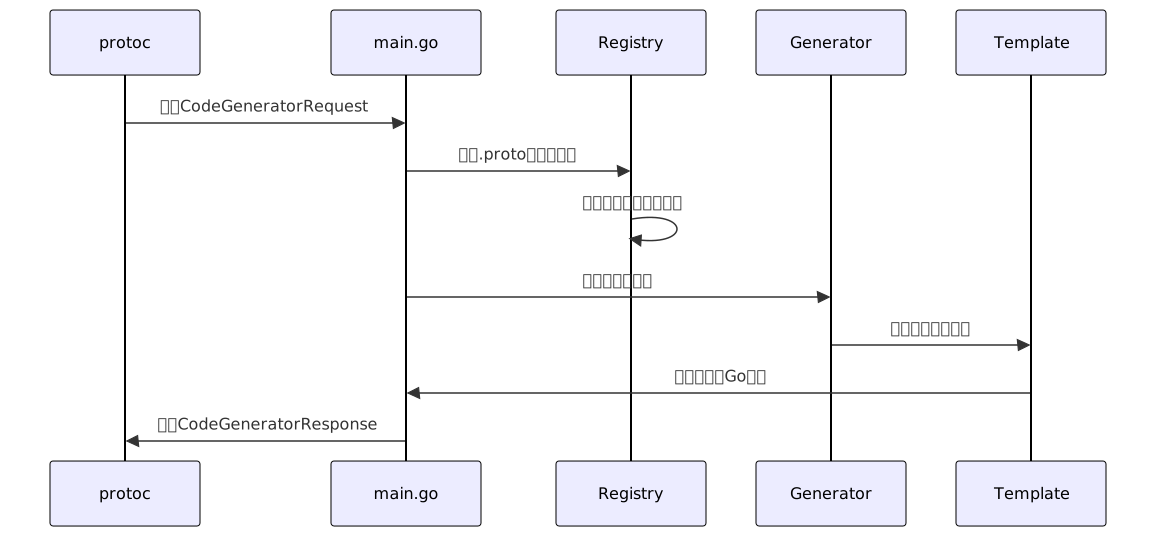
源碼深度解析
1. 主入口文件(main.go)
main.go是整個代碼生成器的入口點,負責:
- 解析命令行參數
- 初始化註冊表(Registry)
- 協調整個代碼生成流程
// 核心命令行參數配置
var (
    registerFuncSuffix         = flag.String("register_func_suffix", "Handler", "註冊方法後綴")
    useRequestContext          = flag.Bool("request_context", true, "使用請求上下文")
    allowDeleteBody            = flag.Bool("allow_delete_body", false, "允許DELETE方法有請求體")
    grpcAPIConfiguration       = flag.String("grpc_api_configuration", "", "gRPC API配置YAML路徑")
    allowPatchFeature          = flag.Bool("allow_patch_feature", true, "啓用PATCH特性")
    standalone                 = flag.Bool("standalone", false, "生成獨立網關包")
)
2. 註冊表(Registry)系統
Registry是整個系統的核心,負責管理所有的Proto描述符信息:
type Registry struct {
    msgs      map[string]*Message    // 消息類型映射
    enums     map[string]*Enum       // 枚舉類型映射
    files     map[string]*File       // 文件映射
    meths     map[string]*Method     // 方法映射

    // 配置選項
    allowDeleteBody            bool
    allowPatchFeature          bool
    standalone                 bool
    generateUnboundMethods     bool
    // ... 更多配置字段
}
Registry的關鍵功能
|
功能類別
|
方法名
|
描述
|
|
查找功能
|
|
根據名稱查找消息和枚舉
|
|
配置管理
|
|
設置生成選項
|
|
包管理
|
|
管理Go包別名衝突
|
|
規則驗證
|
|
檢查重複的HTTP註解
|
3. 生成器(Generator)實現
Generator負責實際的代碼生成工作:
type generator struct {
    reg                *descriptor.Registry
    baseImports        []descriptor.GoPackage
    useRequestContext  bool
    registerFuncSuffix string
    allowPatchFeature  bool
    standalone         bool
}

func (g *generator) Generate(targets []*descriptor.File) ([]*descriptor.ResponseFile, error) {
    var files []*descriptor.ResponseFile
    for _, file := range targets {
        code, err := g.generate(file)
        if err != nil {
            return nil, err
        }
        formatted, err := format.Source([]byte(code))
        files = append(files, &descriptor.ResponseFile{
            GoPkg: file.GoPkg,
            CodeGeneratorResponse_File: &pluginpb.CodeGeneratorResponse_File{
                Name:    proto.String(file.GeneratedFilenamePrefix + ".pb.gw.go"),
                Content: proto.String(string(formatted)),
            },
        })
    }
    return files, nil
}
4. 模板引擎系統
gRPC-Gateway使用Go的text/template包來生成代碼,主要包含以下模板:
核心模板類型
|
模板名稱
|
功能描述
|
適用場景
|
|
|
生成文件頭部
|
包聲明和導入語句
|
|
|
生成請求處理函數
|
各種RPC調用類型
|
|
|
生成本地處理函數
|
服務器端直接調用
|
|
|
生成註冊函數
|
服務註冊邏輯
|
模板函數映射
funcMap template.FuncMap = map[string]interface{}{
    "camelIdentifier": casing.CamelIdentifier,  // 駝峯命名轉換
    "toHTTPMethod": func(method string) string { // HTTP方法常量轉換
        return httpMethods[method]
    },
}
5. 綁定(Binding)系統
Binding系統負責處理HTTP請求到gRPC方法的映射:
type binding struct {
    *descriptor.Binding
    Registry          *descriptor.Registry
    AllowPatchFeature bool
}

// 關鍵綁定方法
func (b binding) GetBodyFieldPath() string {
    if b.Body != nil && len(b.Body.FieldPath) != 0 {
        return b.Body.FieldPath.String()
    }
    return "*"
}

func (b binding) HasQueryParam() bool {
    // 檢查是否需要查詢參數
    fields := make(map[string]bool)
    for _, f := range b.Method.RequestType.Fields {
        fields[f.GetName()] = true
    }
    // ... 過濾邏輯
    return len(fields) > 0
}
擴展機制詳解
1. 自定義模板擴展
開發者可以通過修改模板來定製生成的代碼:
// 示例:添加自定義頭部註釋
var customHeaderTemplate = template.Must(template.New("custom-header").Parse(`
// Code generated by protoc-gen-grpc-gateway. DO NOT EDIT.
// source: {{ .GetName }}
// Customized by: YourCompany

package {{ .GoPkg.Name }}
import (
    {{ range $i := .Imports }}{{ if $i.Standard }}{{ $i | printf "%s\n" }}{{ end }}{{ end }}
    "github.com/yourcompany/custom/runtime"  // 添加自定義導入
)
`))
2. Registry擴展點
Registry提供了多個擴展點供自定義:
// 自定義Registry擴展
type CustomRegistry struct {
    *descriptor.Registry
    customOptions map[string]interface{}
}

func (r *CustomRegistry) SetCustomOption(key string, value interface{}) {
    r.customOptions[key] = value
}

// 重寫查找方法
func (r *CustomRegistry) LookupMsg(location, name string) (*descriptor.Message, error) {
    // 自定義查找邏輯
    if customMsg, ok := r.customMessages[name]; ok {
        return customMsg, nil
    }
    return r.Registry.LookupMsg(location, name)
}
3. 生成器擴展
通過實現gen.Generator接口來創建自定義生成器:
type CustomGenerator struct {
    baseGenerator *gengateway.Generator
    customConfig  CustomConfig
}

func (g *CustomGenerator) Generate(targets []*descriptor.File) ([]*descriptor.ResponseFile, error) {
    // 先調用基礎生成器
    files, err := g.baseGenerator.Generate(targets)
    if err != nil {
        return nil, err
    }

    // 添加自定義生成邏輯
    for _, file := range files {
        customCode := g.generateCustomCode(file)
        file.Content = proto.String(file.GetContent() + customCode)
    }

    return files, nil
}
4. 模板函數擴展
添加自定義模板函數:
funcMap := template.FuncMap{
    "customHelper": func(input string) string {
        // 自定義模板函數邏輯
        return "custom_" + input
    },
    "formatTimestamp": func(ts *timestamppb.Timestamp) string {
        return ts.AsTime().Format(time.RFC3339)
    },
}

// 將自定義函數應用到模板
template.Must(template.New("custom").Funcs(funcMap).Parse(`...`))
高級特性實現
1. FieldMask支持
func (b binding) FieldMaskField() string {
    var fieldMaskField *descriptor.Field
    for _, f := range b.Method.RequestType.Fields {
        if f.GetTypeName() == ".google.protobuf.FieldMask" {
            if fieldMaskField != nil {
                return "" // 多個FieldMask字段時返回空
            }
            fieldMaskField = f
        }
    }
    if fieldMaskField != nil {
        return casing.Camel(fieldMaskField.GetName())
    }
    return ""
}
2. 枚舉路徑參數處理
func (b binding) HasEnumPathParam() bool {
    return b.hasEnumPathParam(false)
}

func (b binding) HasRepeatedEnumPathParam() bool {
    return b.hasEnumPathParam(true)
}

func (b binding) hasEnumPathParam(repeated bool) bool {
    for _, p := range b.PathParams {
        if p.IsEnum() && p.IsRepeated() == repeated {
            return true
        }
    }
    return false
}
3. 流式RPC支持
gRPC-Gateway支持四種RPC模式:
|
RPC類型
|
客户端流
|
服務端流
|
雙向流
|
模板
|
|
Unary
|
❌
|
❌
|
❌
|
|
|
Client Streaming
|
✅
|
❌
|
❌
|
|
|
Server Streaming
|
❌
|
✅
|
❌
|
|
|
Bidirectional
|
✅
|
✅
|
✅
|
|
性能優化策略
1. 模板預編譯
// 預編譯所有模板
var (
    headerTemplate = template.Must(template.New("header").Parse(`...`))
    handlerTemplate = template.Must(template.New("handler").Parse(`...`))
    // ... 其他模板
)

// 在init函數中預編譯
func init() {
    compileAllTemplates()
}
2. 緩存機制
// 實現模板緩存
type TemplateCache struct {
    templates map[string]*template.Template
    mu        sync.RWMutex
}

func (c *TemplateCache) Get(name string) (*template.Template, bool) {
    c.mu.RLock()
    defer c.mu.RUnlock()
    tpl, ok := c.templates[name]
    return tpl, ok
}

func (c *TemplateCache) Set(name string, tpl *template.Template) {
    c.mu.Lock()
    defer c.mu.Unlock()
    c.templates[name] = tpl
}
3. 併發生成
func (g *generator) GenerateConcurrent(targets []*descriptor.File) ([]*descriptor.ResponseFile, error) {
    var wg sync.WaitGroup
    results := make(chan *descriptor.ResponseFile, len(targets))
    errors := make(chan error, len(targets))

    for _, file := range targets {
        wg.Add(1)
        go func(f *descriptor.File) {
            defer wg.Done()
            code, err := g.generate(f)
            if err != nil {
                errors <- err
                return
            }
            results <- &descriptor.ResponseFile{
                GoPkg: f.GoPkg,
                CodeGeneratorResponse_File: &pluginpb.CodeGeneratorResponse_File{
                    Name:    proto.String(f.GeneratedFilenamePrefix + ".pb.gw.go"),
                    Content: proto.String(code),
                },
            }
        }(file)
    }

    wg.Wait()
    close(results)
    close(errors)

    // 處理結果和錯誤
}
最佳實踐
1. 自定義生成器配置
# custom_generator.yaml
options:
  register_func_suffix: "GatewayHandler"
  use_request_context: true
  allow_patch_feature: true
  standalone: false
  warn_on_unbound_methods: true

custom_templates:
  header: "templates/custom_header.tmpl"
  handler: "templates/custom_handler.tmpl"

extensions:
  - name: "validation"
    import: "github.com/yourcompany/validation"
  - name: "logging"
    import: "github.com/yourcompany/logging"
2. 錯誤處理策略
type ErrorHandlingGenerator struct {
    baseGenerator *gengateway.Generator
    errorConfig   ErrorConfig
}

func (g *ErrorHandlingGenerator) Generate(targets []*descriptor.File) ([]*descriptor.ResponseFile, error) {
    files, err := g.baseGenerator.Generate(targets)
    if err != nil {
        return nil, fmt.Errorf("base generation failed: %w", err)
    }

    for i, file := range files {
        enhancedContent, err := g.enhanceWithErrorHandling(file.GetContent())
        if err != nil {
            return nil, fmt.Errorf("enhancing file %s failed: %w", file.GetName(), err)
        }
        files[i].Content = proto.String(enhancedContent)
    }

    return files, nil
}
3. 代碼質量保證
// 代碼驗證鈎子
type CodeValidator interface {
    Validate(code string) error
}

// 語法檢查
func validateGoSyntax(code string) error {
    _, err := format.Source([]byte(code))
    if err != nil {
        return fmt.Errorf("invalid Go syntax: %w", err)
    }
    return nil
}

// 導入檢查
func validateImports(code string, expectedImports []string) error {
    fset := token.NewFileSet()
    f, err := parser.ParseFile(fset, "", code, parser.ImportsOnly)
    if err != nil {
        return err
    }

    actualImports := make(map[string]bool)
    for _, imp := range f.Imports {
        actualImports[strings.Trim(imp.Path.Value, `"`)] = true
    }

    for _, expected := range expectedImports {
        if !actualImports[expected] {
            return fmt.Errorf("missing import: %s", expected)
        }
    }

    return nil
}
總結
gRPC-Gateway的代碼生成器是一個高度可擴展的系統,其架構設計體現了良好的軟件工程原則:
- 模塊化設計:Registry、Generator、Template各司其職
- 擴展性:通過接口和模板機制支持自定義擴展
- 性能優化:模板預編譯、緩存、併發生成等策略
- 錯誤處理:完善的錯誤處理和質量保證機制
通過深入理解其源碼架構,開發者可以更好地定製和擴展代碼生成器,滿足特定的業務需求。無論是添加自定義功能、優化生成性能,還是集成第三方庫,gRPC-Gateway都提供了充分的擴展點。
掌握這些核心概念和擴展機制,將幫助你在實際項目中更有效地使用和定製gRPC-Gateway,構建高性能、可維護的gRPC網關服務。
