

《編譯原理》學習第 3 天,p18總結,總計 14頁。
一、技術總結
1.assembler
(1)計算機結構
要想學習彙編的時候更好的理解,要先了解計算機的結構,以下是本人學習彙編時總結的一張圖,每當學習彙編時,看到“計數器”,“解碼器”,“寄存器”,“數據總線”等概念時,就知道説的這些東西在哪個位置。
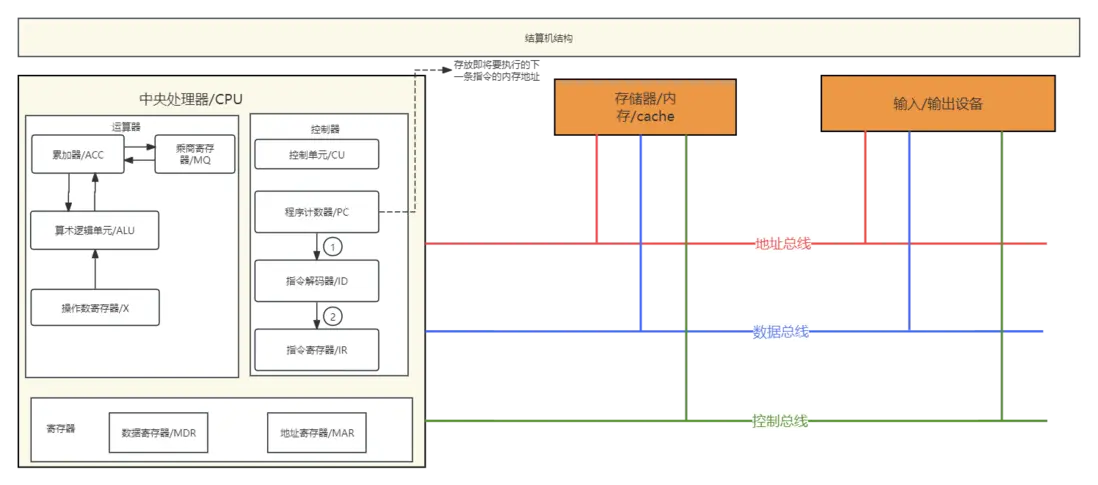
(2)assembly code(彙編代碼)
p17,Some compilers produce assembly code, as in (1.5), that is passed to an assembler for further processing.
MOVF id3, R2
MULF #60.0, R2
MOVF id2, R1
ADDF R2, R1
MOVF R1,id1
上面彙編代碼對應的代碼為:
temp1 := id3 * 60.0
id1: = id2 + temp1
這裏提到了彙編代碼,所以我們在閲讀本書時需要有一點彙編語言基礎:
(3)指令(instruction)
如MOVF, F表示Floating-point numbers。注意,指令有兩種語法,分別是Intel 語法和AT&T語法。支持Intel語法的主要是Windows系統,支持AT&T語法的主要是Unix系統。
Intel 語法:mov dest, src
AT&T 語法:mov src, dest
參考:https://en.wikipedia.org/wiki/X86_assembly_language
p15, The first and second operands of each instruction specify a source and destination, respectively....This code moves the contents of address id3 into register2, then multiplies it with the real-constant 60.0.——書裏使用的是AT&T語法,本書作者之一Alfred V.Aho與AT&T的關係:Alfred V.Aho is head of the Computation Principle Research Department at AT&T Bell Laboratories in Murray Hill New Jersey。
(4)#號
表示intermediate data。
2.machine code
0001 01 00 00000000
0011 01 10 00000010
0010 01 00 00000100
如上所示稱為machine code, 當我們看到“machine code”這個詞的時候我們要想到上面的代碼。
二、其它
進入六月以來,每天都忙於加班,疲於奔命,閲讀《編譯原理》幾乎無進度,然而內心覺得這並不是我想要的,因為長此以往,就會停不前,還是要每天學習一些新的東西;二是,自己也不喜歡這樣重複的去做相同的事。所以,我又折回來繼續看書了。
四、參考資料
1. 編程
(1)Alfred V. Aho,Monica S. Lam,Ravi Sethi,Jeffrey D. Ullman,《編譯原理(英文版·第1版)》:https://book.douban.com/subject/5416783/
2. 英語
(1)Etymology Dictionary:https://www.etymonline.com
(2) Cambridge Dictionary:https://dictionary.cambridge.org

歡迎搜索及關注:編程人(a_codists)



